
2010-2011
Ibiza, Spain.
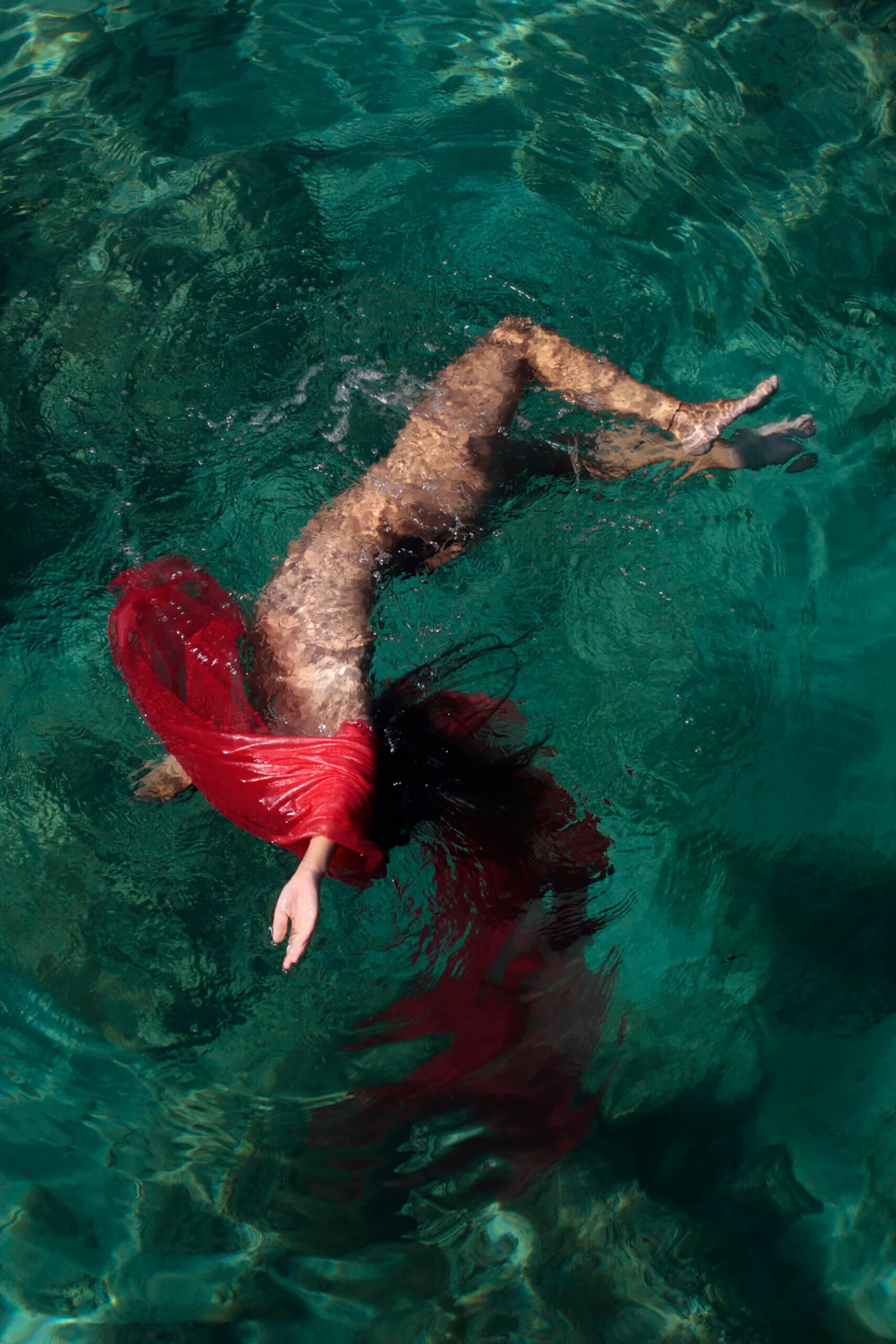
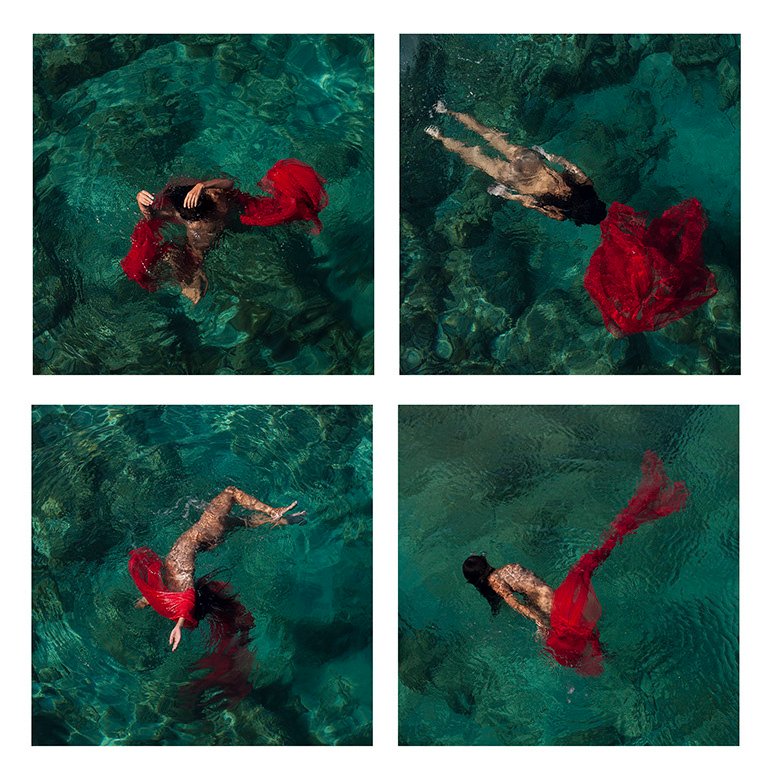
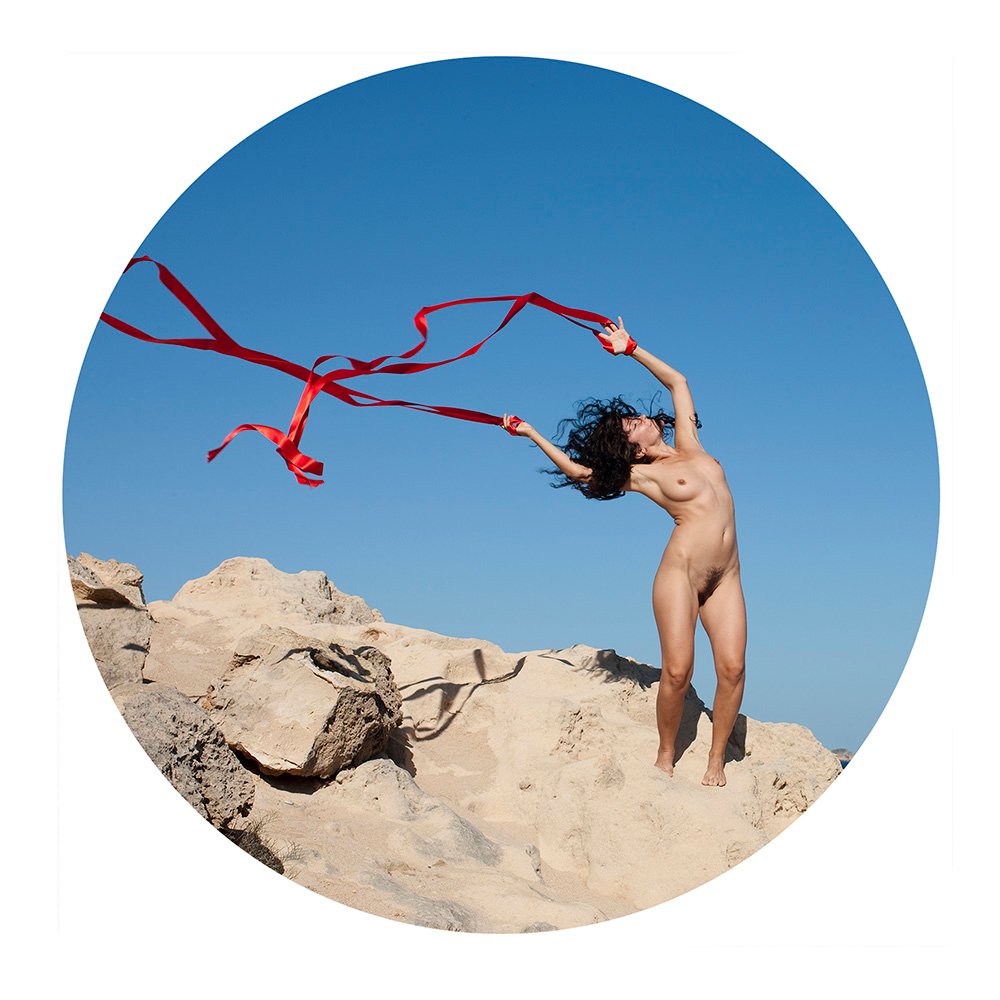
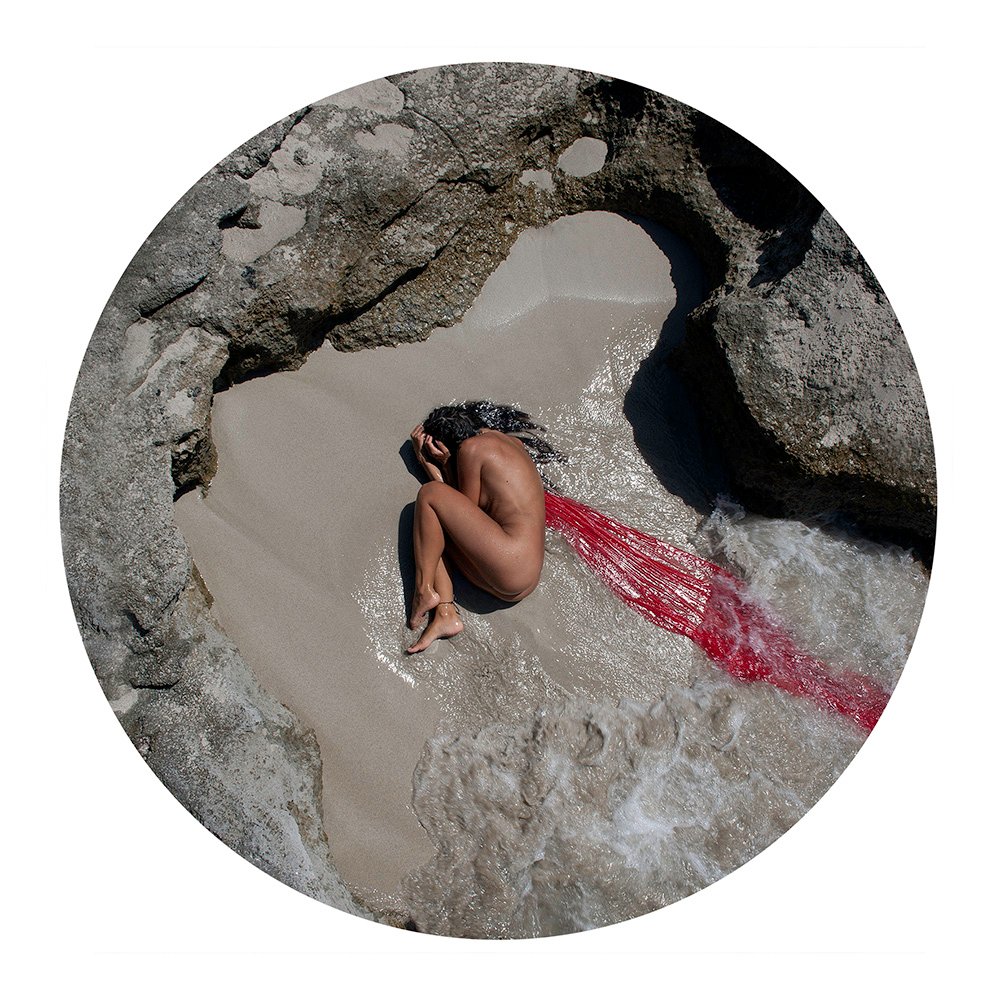
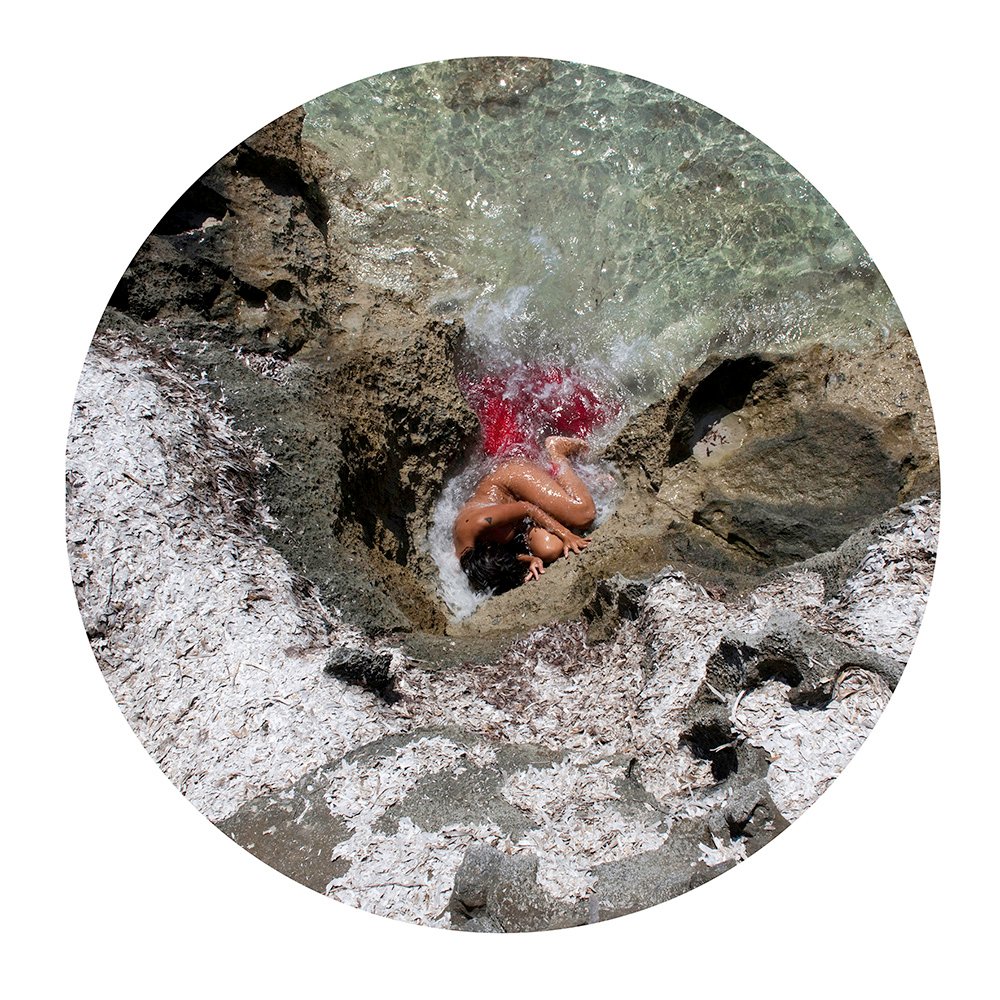
Aunque las imágenes de esta serie fueron inicialmente pensadas, algunas surgieron de manera espontánea. Salía con mi cámara y materiales en busca de algo con lo que interactuar; cuando lo encontraba, me entregaba a experimentar el momento, a sentir lo que estaba sucediendo. La puesta en escena se convertía en algo real. Inmersa en el paisaje y formando parte de él, viví experiencias que he intentado plasmar en estas fotografías. Sumergirme en el agua en posición fetal me transportó al útero materno. En otro momento, experimenté algo parecido a un nacimiento al ser depositada por el agua sobre la tierra. Jugar con el viento evocó sentimientos de infancia y una inmensa alegría.
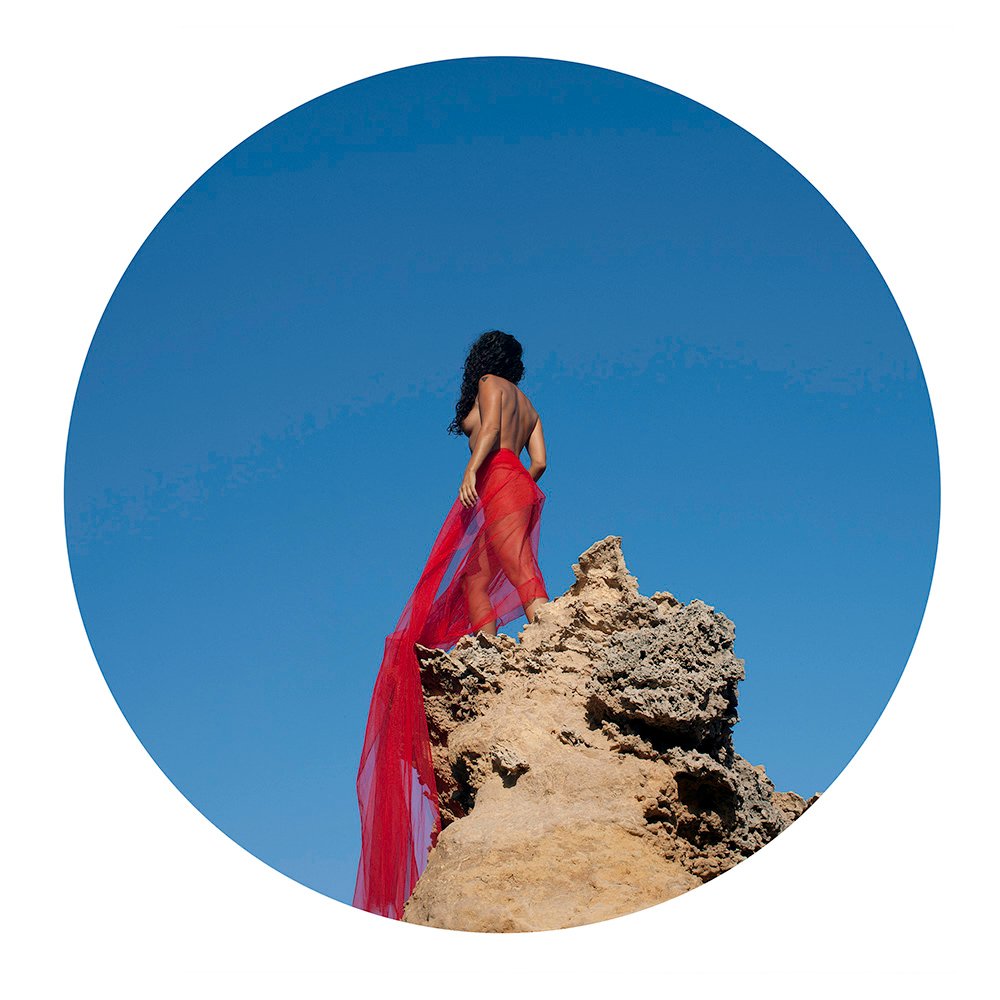
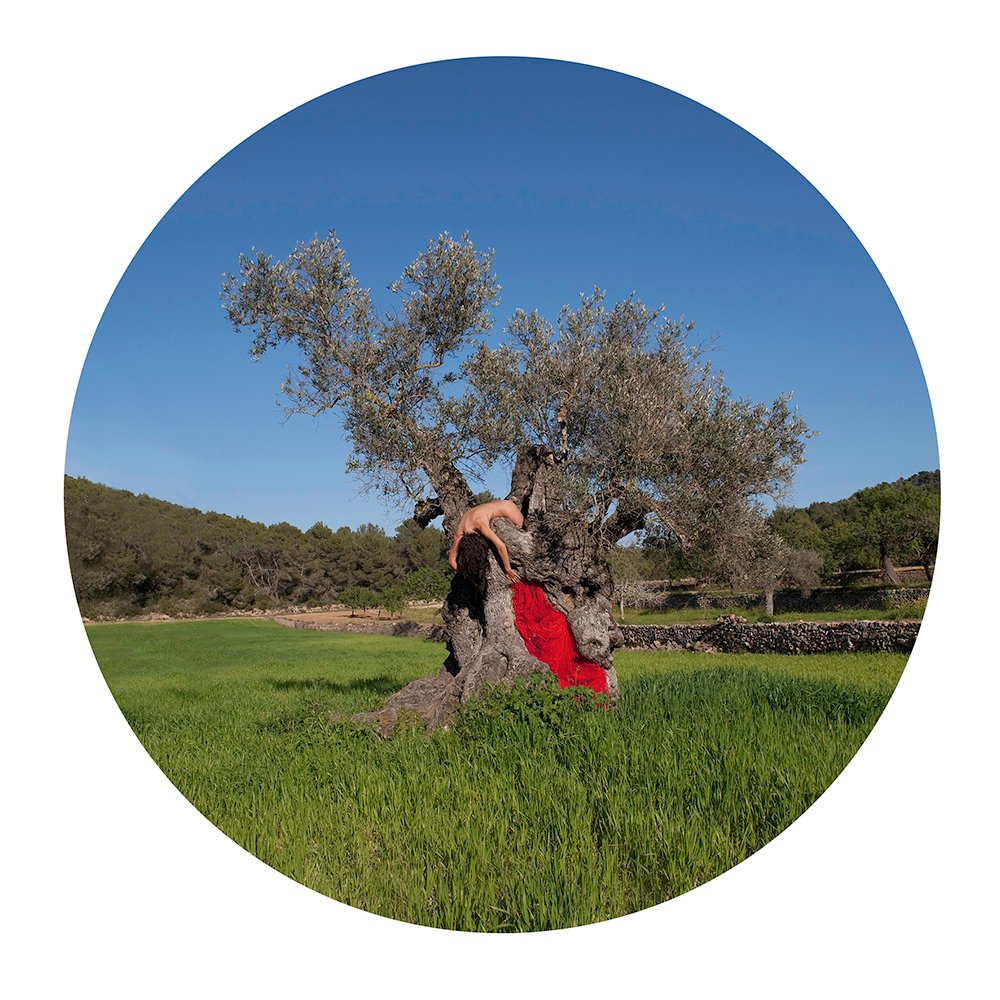
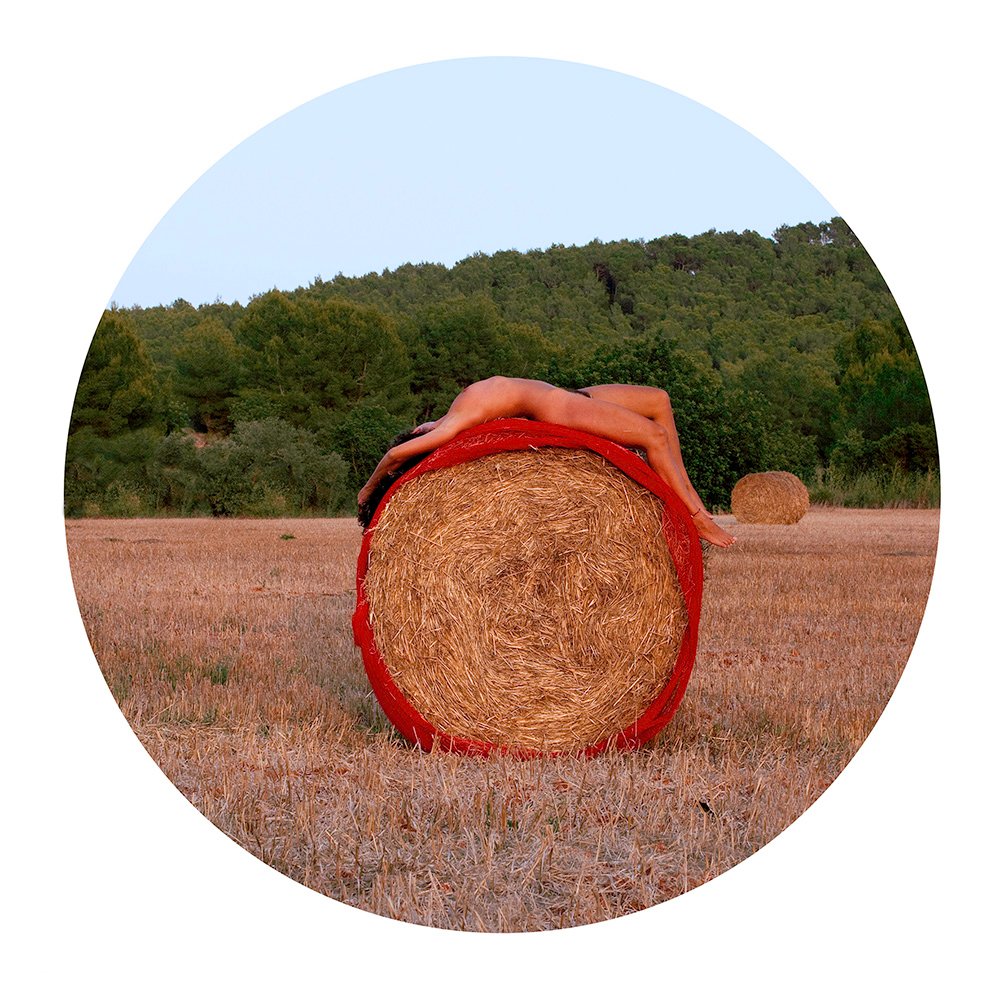
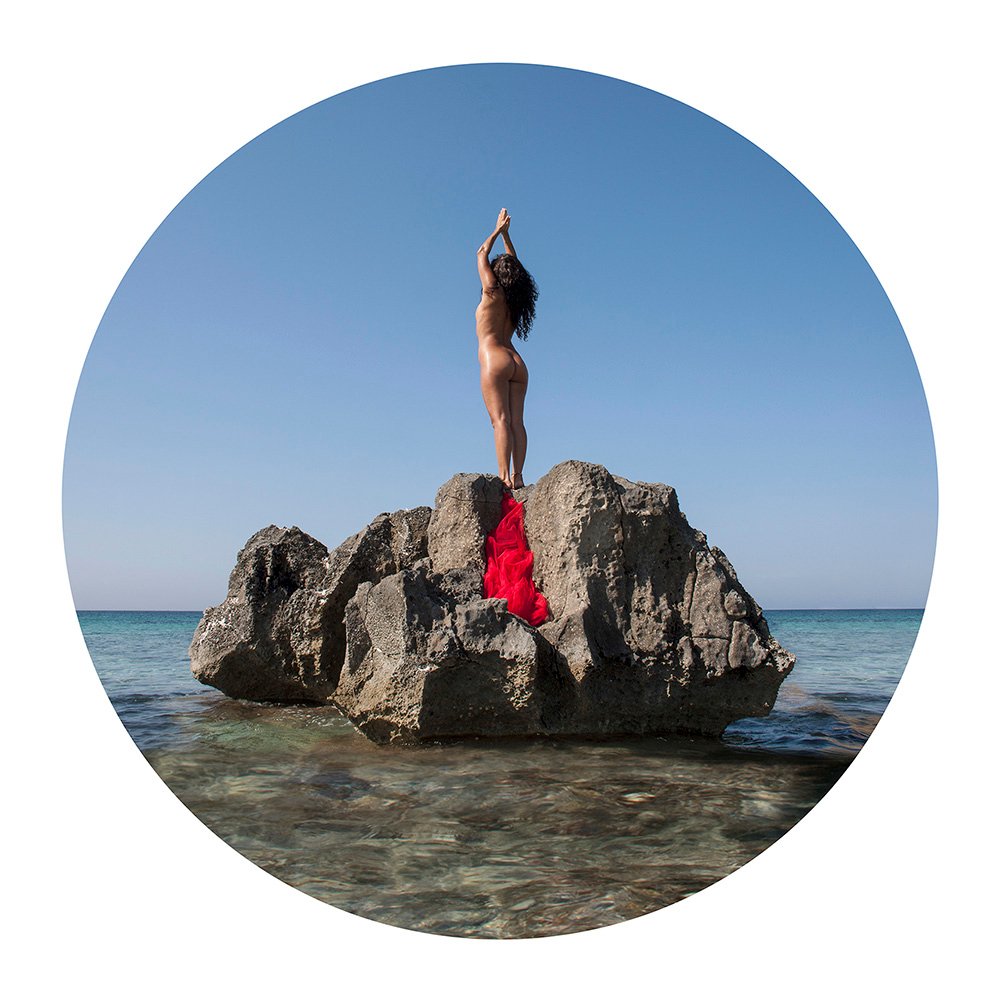
El color rojo, símbolo de pasión y fuerza, es también el color de la sangre menstrual. Utilicé tejidos de este color para destacar elementos que a veces resultan imperceptibles, como el movimiento del agua, el soplo del viento o el vacío de una grieta. También para subrayar desafíos a la gravedad, como la verticalidad de un árbol, o para mimetizarme con las amapolas de un campo de flores. ¿No es un milagro que florezcan todas al mismo tiempo? Quizá eso sea Dios.
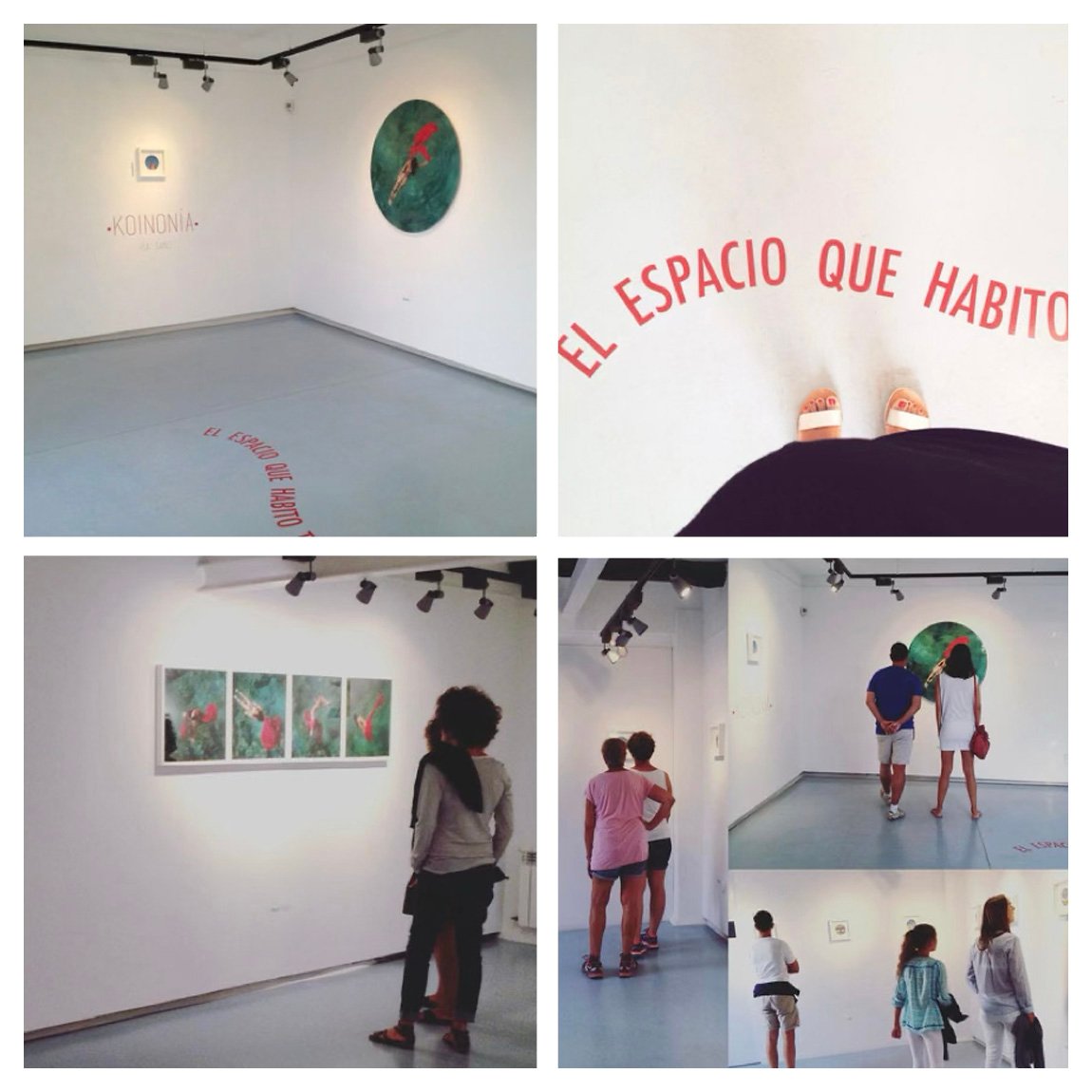
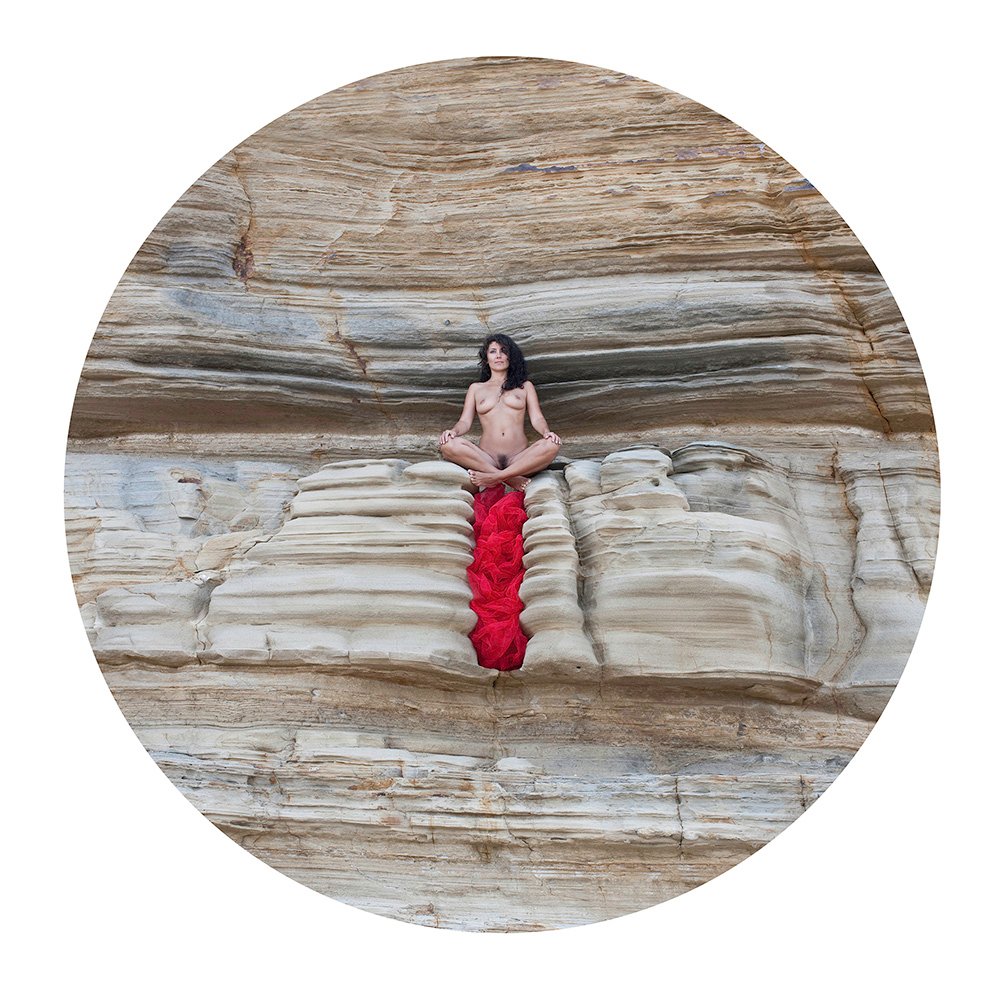
Sobre la forma circular de las imágenes, me preguntaba: ¿Por qué todo tiene que estar enmarcado? ¿Dónde empieza y dónde termina una obra? Para mí, este trabajo debería leerse desde el centro hacia los bordes. Propongo otra forma de mirar, más infinita, expansiva y femenina. Cuando realicé este trabajo pensaba en el arte rupestre y me sentía como los pintores de las cavernas. La diferencia es que sustituí los pigmentos, la sangre y la piedra por telas, mi cuerpo en la naturaleza y el sensor digital.
EN
Although the images in this series were initially conceived beforehand, some emerged spontaneously. I would go out with my camera and materials in search of something to interact with; when I found it, I would surrender to experiencing the moment, to feeling what was happening. The staging became something real. Immersed in the landscape and becoming part of it, I lived experiences that I have tried to capture in these photographs. Submerging myself in the water in a foetal position transported me back to the womb. At another moment, I experienced something like a birth as the water deposited me onto the land. Playing with the wind evoked feelings of childhood and an immense sense of joy.
The colour red, a symbol of passion and strength, is also the colour of menstrual blood. I used fabrics of this colour to highlight elements that can sometimes go unnoticed, such as the movement of water, the breath of the wind or the emptiness of a crack. I also used them to emphasise challenges to gravity, such as the verticality of a tree, or to blend in with the poppies in a field of flowers. Isn’t it a miracle that they all bloom at the same time? Perhaps that is God.
Regarding the circular shape of the images, I wondered: Why does everything have to be framed? Where does a work begin and where does it end? For me, this work should be read from the centre towards the edges. I propose another way of looking, one that is more infinite, expansive and feminine. When I made this work, I thought about cave art and felt like the cave painters. The difference is that I replaced pigments, blood and stone with fabrics, my body in nature and the digital sensor.
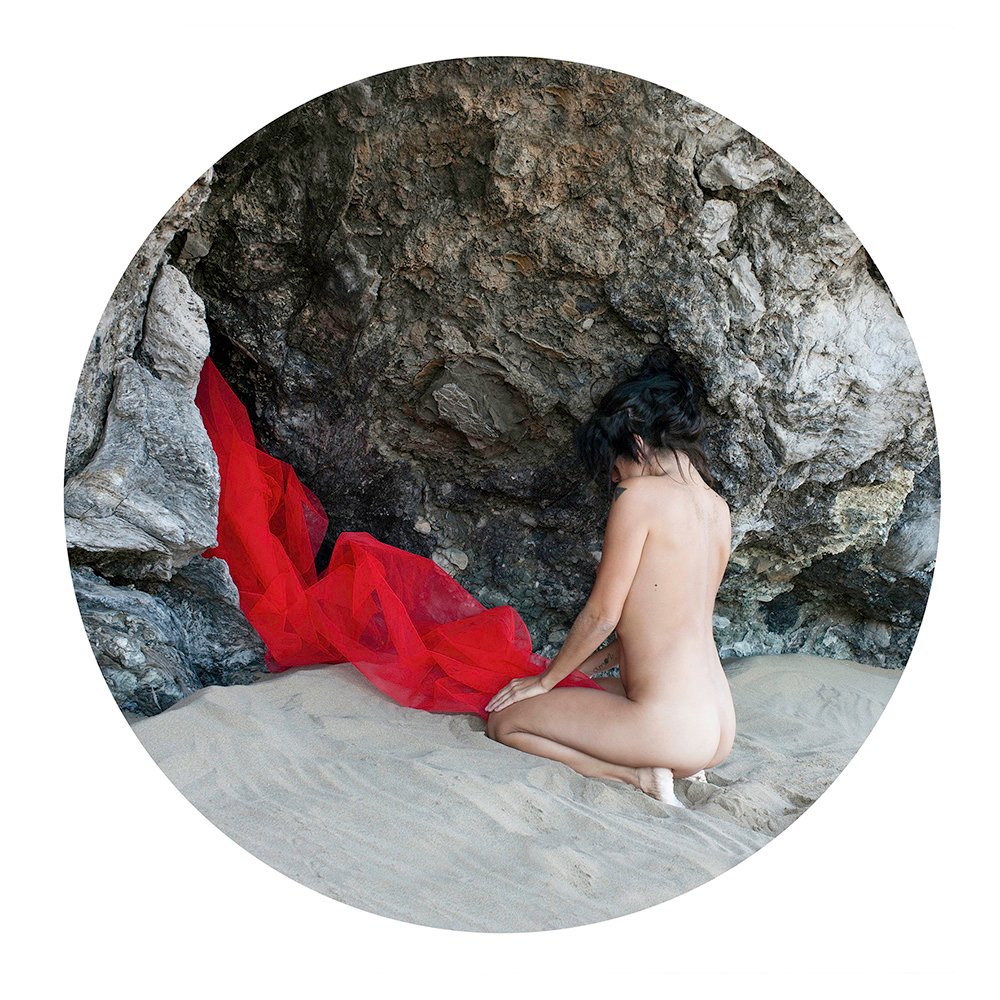
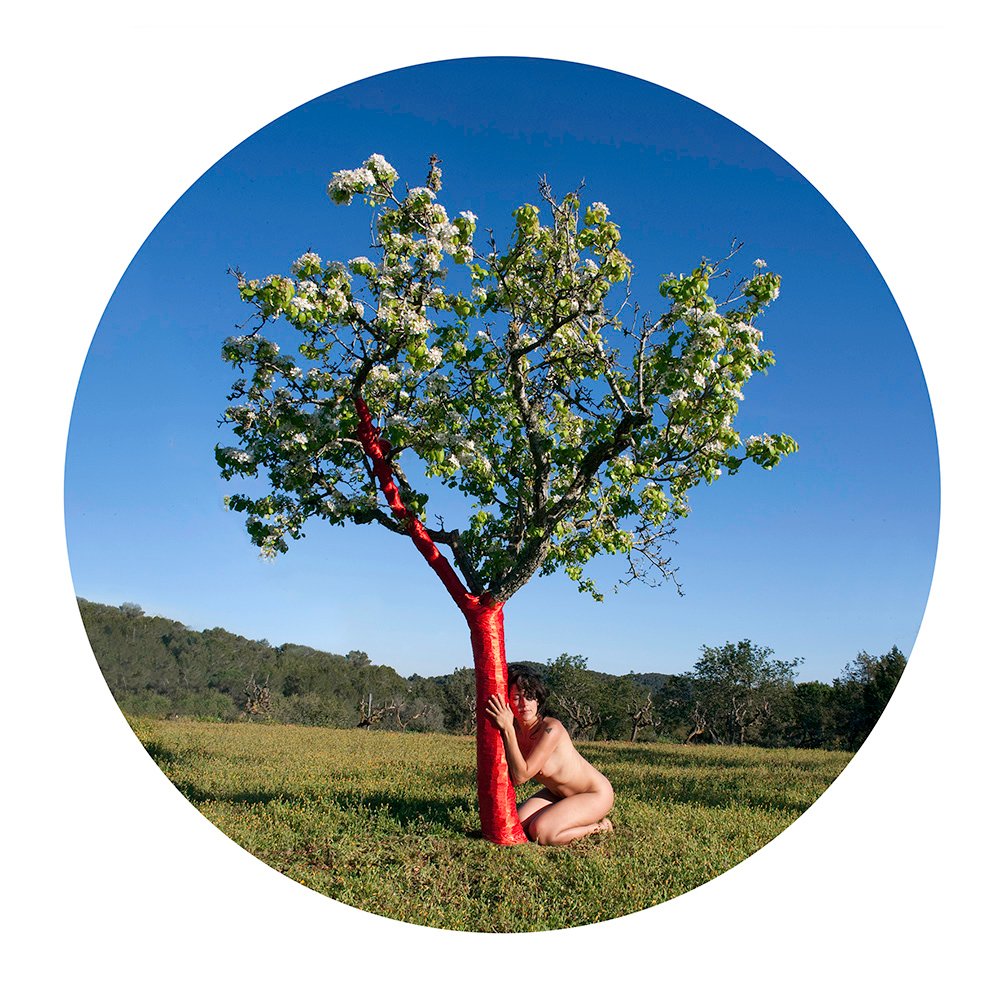
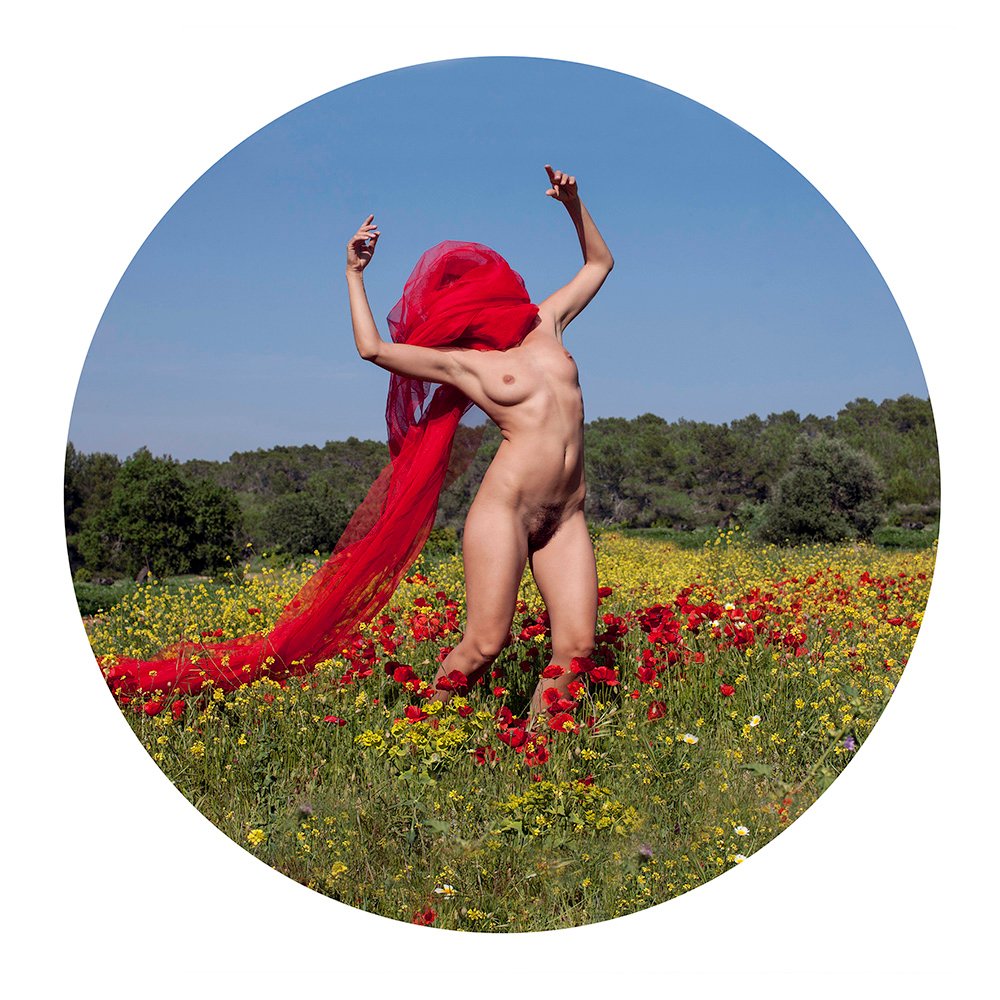
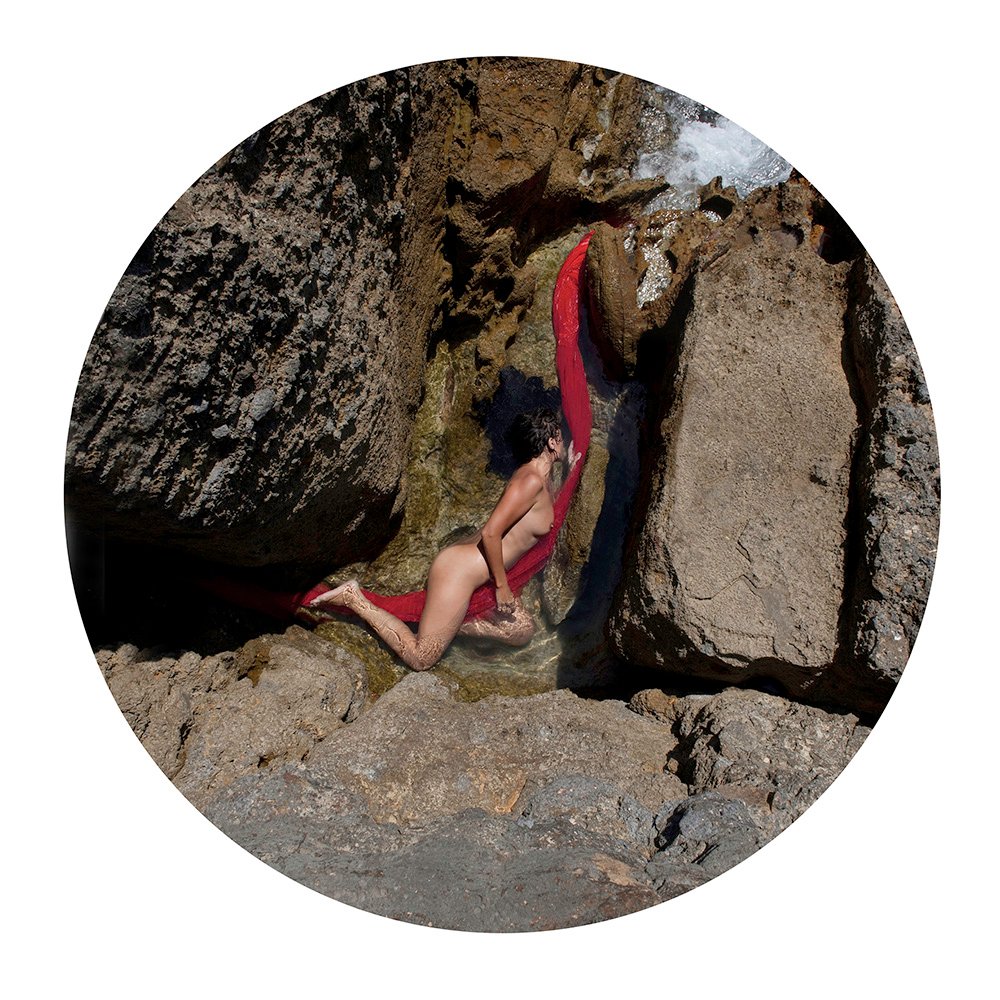
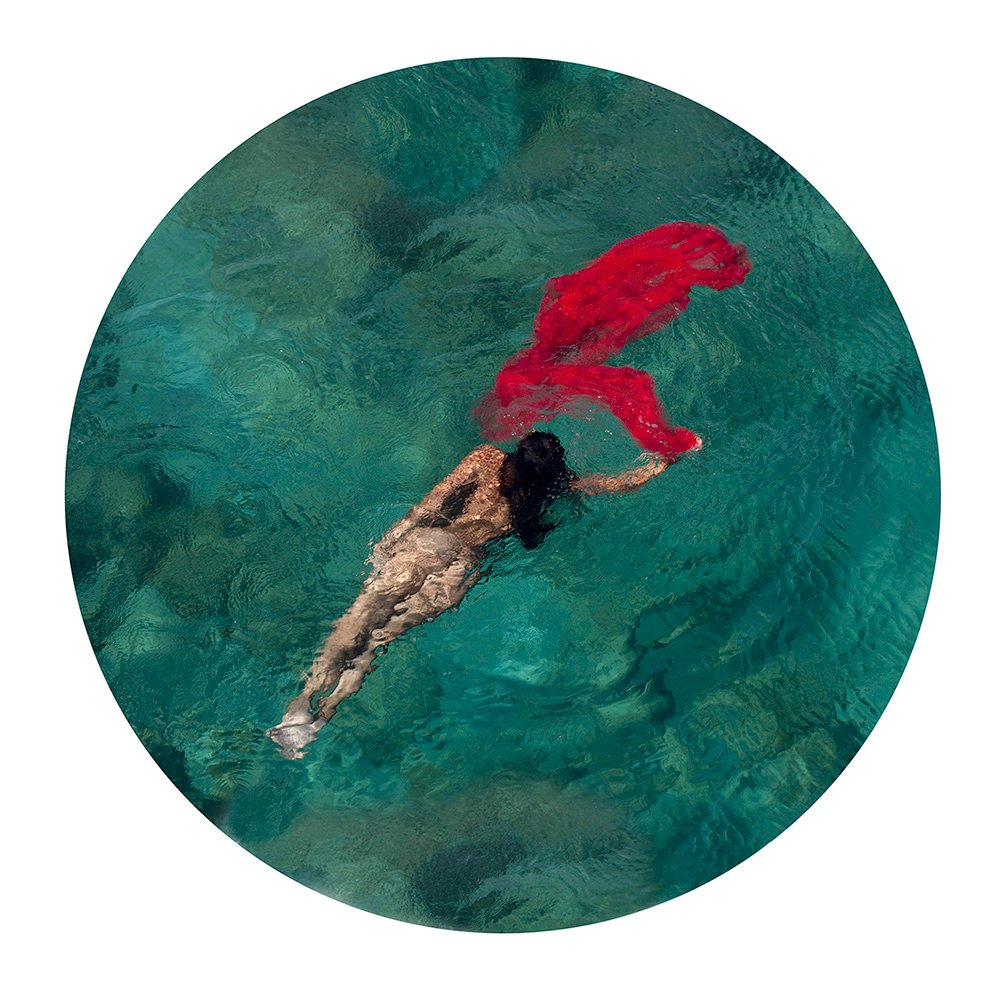
“My first impression was that Koinonia was organised into three groups: the aquatic world, the vegetal world and the mineral world, and that this already offered a clue to the foundations sustaining the universe constructed there. I happened to visit while reading On the Nature of Things by the Epicurean philosopher Lucretius, and suddenly it was as though the nature outlined there had become palpable. Or, to put it another way, less pedantically, my intuition was that what the photographs proposed deliberately connected with a conception of nature that reached far back in time, without disregarding the reflections and feelings it had aroused two thousand years ago, when the universe still retained vast realms of mystery.
As I was saying, the mineral world had always served to express nature’s indifference to the vicissitudes of humankind. In your photographs, however, the rocks embody attitudes of meditation, with a distinctly Eastern quality, a fusion with what is clearly a setting — through which nature enters the discourse and abandons its unconcern and detachment — that seems to evoke Buddhist statues carved into rock and consequently to suggest a reformulated ataraxia: that state of peace with oneself and with nature advocated by the Greeks, while at the same time broadening the range of references.
This, for me, is the beginning: that which makes it possible to celebrate well-being in nature. But not just any nature: nature that yields. The tree that bears fruit, the straw after the harvest. Far, then, from approaching it as one would a garden. “El rei cull la rosa, el pagès cull el blat” [“The king picks the rose, the peasant harvests the wheat”], wrote Ramon Llull. One remains upon the rock; into the cultivated field one sinks, takes root, conscious of how little one possesses — like Llull’s peasant — and bids farewell to the gods, who, before abandoning humankind, made the gesture of teaching them how to cultivate wheat. Ever since, wheat and the peasant who works it have been inextricably bound together. Far, very far away, remains the king.
You told me that a visitor to the exhibition had mentioned Heraclitus to you, because of the water. Heraclitus was melancholic: we never bathe twice in the same river. I cannot discern signs of melancholy in the aquatic photographs. On the contrary, I perceive serenity, playfulness, lightness, an absence of obstacles, weightlessness… and, in all of them, the anti-Heraclitean perception that time comes to a standstill and that, at last, the waters have been made to flow without disappearing.”
Antonio María Espadaler Poch, Professor of Medieval Literature, University of Barcelona, Spain.
ES
«Mi primera impresión fue que Koinonia se organizaba en tres grupos: el mundo acuático, el mundo vegetal y el mineral, y que eso era ya una pista sobre los fundamentos que sostenía el universo que allí se erigía. La visita me pilló leyendo el tratado sobre la naturaleza del filósofo epicúreo Lucrecio, y de repente fue como si la naturaleza que allí se esboza se hiciera palpable. O dicho de otro modo, menos pedante, mi intuición fue que aquello que las fotografías proponían conectaba voluntariamente en una concepción de la naturaleza que venía de muy lejos, y no despreciaba las reflexiones y los sentimientos que había suscitado dos mil años atrás, cuando el universo todavía conservaba amplias zonas de misterio. Como te decía, el mundo mineral siempre había servido para expresar la indiferencia de la naturaleza ante los vaivenes del género humano. En tus fotos, en cambio, las rocas contienen actitudes de meditación, de claro sabor oriental, de fusión con lo que a todas luces es una escenografía –por donde la naturaleza se incorpora al discurso y abandona su despreocupación y su distanciamiento- que parece remitir a las estatuas budistas entalladas en la roca, y sugerir, en consecuencia, una reformulada ataraxia, esa paz consigo mismo y con la naturaleza que predicaban los griegos, al tiempo que amplía el abanico de referencias. Este para mí, es el principio, es decir aquello que permite celebrar el bienestar en la naturaleza. Pero no en cualquiera: en aquella que rinde. El árbol que da fruto, la paja después de la cosecha. Lejos, pues, de acercarse a ella como a un jardín. “El rei cull la rosa, el pagès cull el blat”, decía Ramon Llull. En la roca se está, en el campo trabajado se hunde uno, se enraiza uno consciente de lo poco que tiene –como el payés de Llull- y se despide de los dioses, que antes de abandonar a los hombres tuvieron el gesto de enseñarles a cultivar el trigo. Desde entonces el trigo y payés que lo trabaja están indisolublemente unidos. Lejos, muy lejos, queda el rey. Me decías que una visitante en la exposición te hacía referencia a Heráclito, por el agua. Heráclito era un melancólico: Nunca nos bañamos dos veces en el mismo río. No sé apreciar señales de melancolía en las fotografías acuáticas. Al contrario, advierto placidez, juego, ligereza, ausencia de estorbos, levedad… y la percepción en todas ellas, antiheracliana, de que el tiempo se detiene y que se ha conseguido, por fin, que las aguas fluyan sin desaparecer. »
Antonio María Espadaler Poch, Profesor de Literatura Medieval, Universidad de Barcelona. España.